What is yoga?
Yoga is a long-established practice that brings together postures, breath and attention. At ATC we treat it as a movement discipline: work that makes room in the body, trains balance and slows the pace.
During the day most of us move quickly, breathe shallowly and notice our body only when something hurts. Yoga reverses this flow for a while. Movements are tied to the rhythm of the breath; instead of hurrying, you pay attention to what you feel in each posture.
You do not need to be flexible, calm or experienced to do yoga. These are not starting conditions but qualities the practice can support over time. On the mat you are not competing with anyone; you work with your own body, as you are that day.
Don’t look for balance only on the mat.
The three components of yoga
Although a yoga class looks from the outside like a series of postures, it actually works three connected things together:
When these three come together, the class becomes more than an exercise session: an interval in which you move from the pace of the day to your own rhythm.
Movement
Postures done standing, seated and on the floor; they work strength, flexibility and range of motion together.
Breath
The breath accompanies the movement. It sets the rhythm and makes it easier to focus.
Balance
The work addresses both physical balance and the ability of attention to stay on a single point.
Who is it suitable for?
Yoga can be adapted to different ages and fitness levels. If any of these sounds familiar, it may be of interest to you:
Our programmes are planned around different levels of experience and fitness. We know that someone starting for the first time and someone who has practised for a long time do not have the same needs; postures are adapted accordingly.
- You spend most of the day at a desk or in front of a screen and want to open up your body.
- Alongside fast-paced training, you need slow and attentive work.
- You want to improve your balance and range of motion.
- You are looking for a regular time when you can focus on your breath and your body.
- You have never exercised before and want a gentle start.
How does a yoga class run?
The content of classes varies with level and the focus of the day; the general flow is usually as follows:
At the end of the class, our aim is for you to leave a little calmer, and moving a little more easily, than when you came to the mat.
Settling in
The class begins with a short silence, spent seated or lying down. Attention is turned to the breath.
Warm-up
Gentle movements are done to mobilise the spine, shoulders and hips.
Postures
Postures done standing and on the floor are linked together. Your trainer offers options suited to different levels for each posture.
Balance and stretching
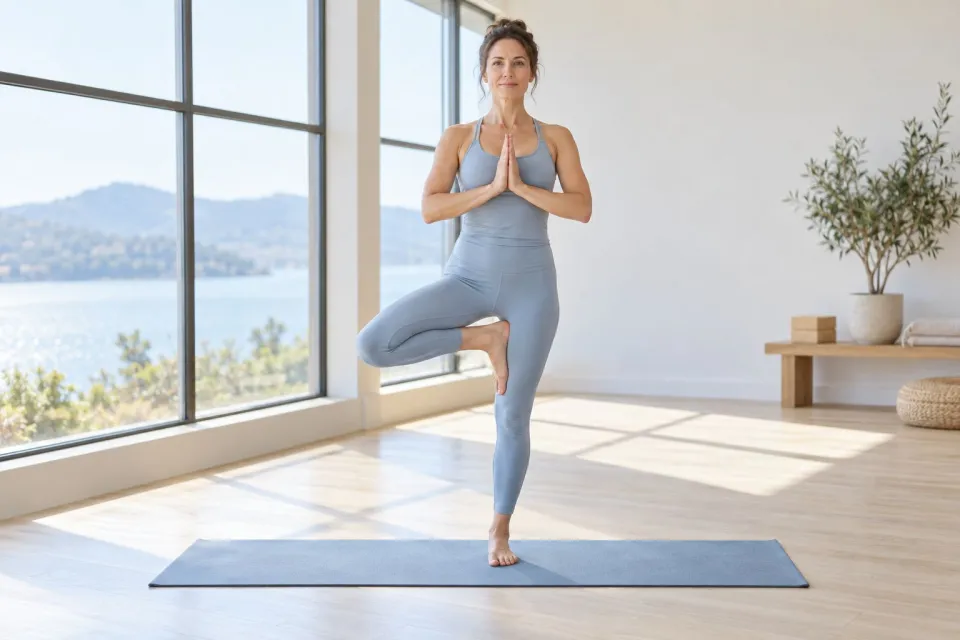
Balance work on one leg and stretching postures held for longer follow.
Rest
The class closes with a few minutes of rest in which the body is let go completely.
Yoga and performance for life
In ATC’s view, performance is not needed only when competing; you also need to feel strong, mobile and well in the course of life. In this picture, yoga stands for the share that belongs to slowing down. It is not possible to progress by speeding up all the time; to move well, you sometimes need to stop, breathe and listen to your body.
What you work on on the mat can find its counterpart off the mat too: noticing your posture in a long meeting, slowing your breath in a tense moment, or knowing your body’s limit when reaching for something. This is what we mean by “Don’t look for balance only on the mat”.
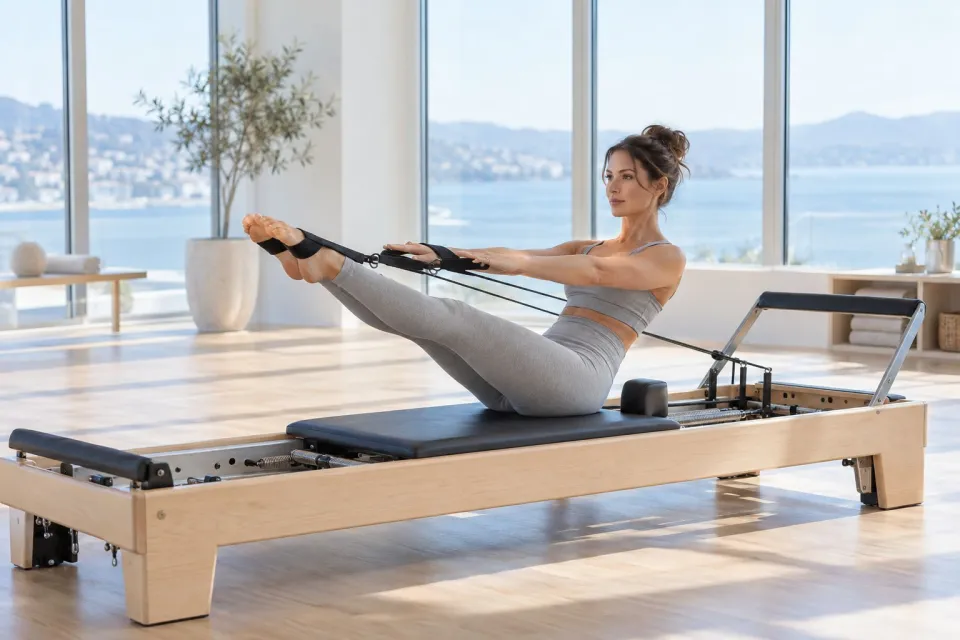
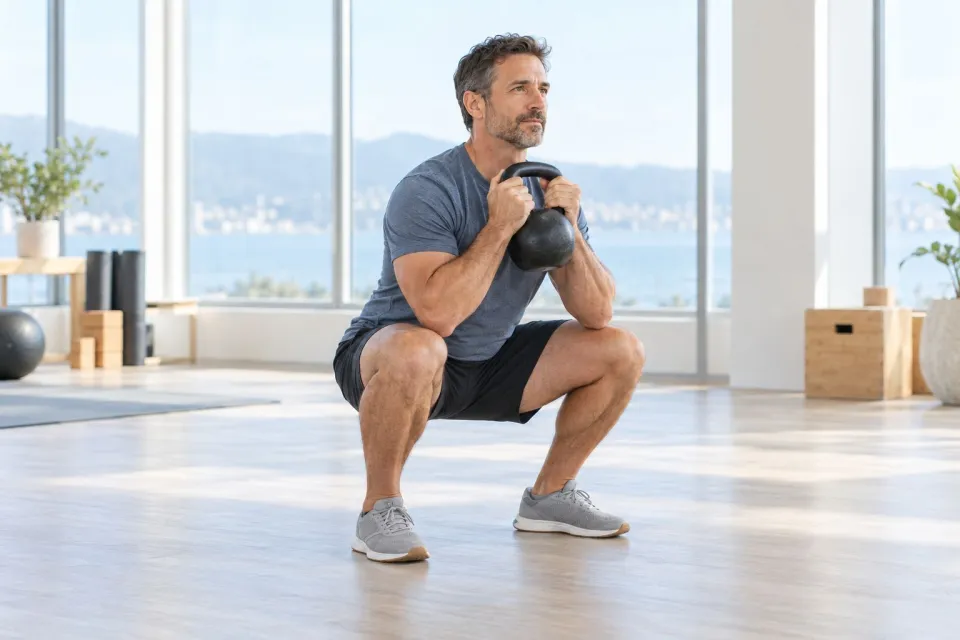
Yoga also gets on well with the other disciplines. For those who do fitness, it can offer a complement that supports range of motion; for those who do Pilates, a different perspective on breath and flow.
Why is the breath so important?
The order in the slogan “Breathe. Move. Keep going.” is no accident. In yoga, the breath comes before the movement. You enter a posture with the breath, stay in it with the breath and come out of it with the breath.
There is a practical reason for this: the breath is the most honest indicator of how hard you are working at that moment. If your breath is cutting short or being held, you have most likely gone past your limit; in that case the posture needs to be eased. If your breath is calm and regular, you are in the right place. Your trainer reminds you of the breath throughout the class; over time this becomes a check you can do for yourself.
The habit of paying attention to the breath can be carried off the mat too. Pausing to take a few slow breaths during the day is the part of yoga that travels most easily.
Common misconceptions about yoga
“You have to be flexible to do yoga.”
This is like saying “you have to know how to swim to learn to swim”. Flexibility is not a starting condition; postures are adapted to your current range of motion.
“Yoga is just stretching and relaxing.”
Alongside stretching, strength and balance are trained in classes too. Holding a posture still or standing on one leg takes more effort than it looks.
“I can’t quieten my mind, so yoga isn’t for me.”
No one is expected to stop their thoughts completely. Attention wandering and coming back to the breath is the practice itself. Every time you manage this, you have already done the work.
“I should be able to do every posture.”
Not every body suits every posture, and there is nothing wrong with that. Doing a simpler option of a posture, or leaving it out altogether, does not take anything away from the practice.
Tips for keeping up your practice
- Short but regular: A moderate practice kept up regularly lasts better than long classes done now and then.
- A fixed time: Setting aside particular days and times of the week for yoga removes the burden of deciding.
- Easing your expectations: No two classes go the same way. Some days your body is open, some days it is stiff; both are normal.
- Measuring progress by feeling, not by posture: A calmer breath is often a more meaningful indicator than a deeper stretch.
How is yoga approached at ATC?
Yoga classes, too, are part of ATC’s overall approach. Before you start, we carry out a short initial assessment; we learn about your training history, your goals and the points that need attention.
You can read how the process works on the Our Approach page.
- Adapted to your level: Every posture has easier and more advanced options; you work with the one that suits you.
- A trainer who knows you: Your trainer knows your goals and cares about your progress.
- A friendly setting: We do not separate professionalism from warmth; we aim for a class where you will not hesitate to ask a question or skip a posture.
One-to-one and group options
Depending on the discipline, there are options to work one-to-one or in a group. In one-to-one classes the practice is shaped entirely around you; it provides a comfortable setting for learning the finer points of the postures. In group classes, breathing and moving together has a calm of its own. You can choose the model that suits you based on your goals and preferences.
Preparing for your first class
- Wear comfortable clothes that do not restrict movement. Yoga is done barefoot.
- Try not to eat a heavy meal in the two hours before class.
- Bring water with you; you are welcome to bring your own mat if you wish.
- If you have a complaint, or anything you would like taken into account, tell your trainer before the class begins.
- Do not compare yourself with others. Everyone’s body, and how they are that day, is different.
Frequently asked questions about Yoga
I’m not flexible. Can I do yoga?
Yes. Flexibility is not a prerequisite. Postures are adapted to your current range of motion and supported with props where needed.
How many days a week should I do yoga?
That depends on your goal, your current fitness and your daily life. Our trainers help you set up a routine that is sustainable for you.
Can I do yoga together with fitness or Pilates?
Yes, the disciplines can complement one another. We can talk through together, in your initial assessment, which combination makes sense for you.
Can I take a trial class?
You can find out about our current trial class and introductory meeting options through our contact form or on WhatsApp.