What does fitness mean at ATC?
For most people, fitness brings to mind heavy weights and crowded gyms. Our definition is plainer: strength that is useful to you in daily life.
Performance is not only running faster, jumping higher or lifting more weight in a competition. Sometimes it is being able to climb the stairs comfortably; sometimes it is still feeling energetic at the end of a long day. We build our fitness programmes from this point of view: the aim is not to look impressive in the gym but to move more comfortably outside it.
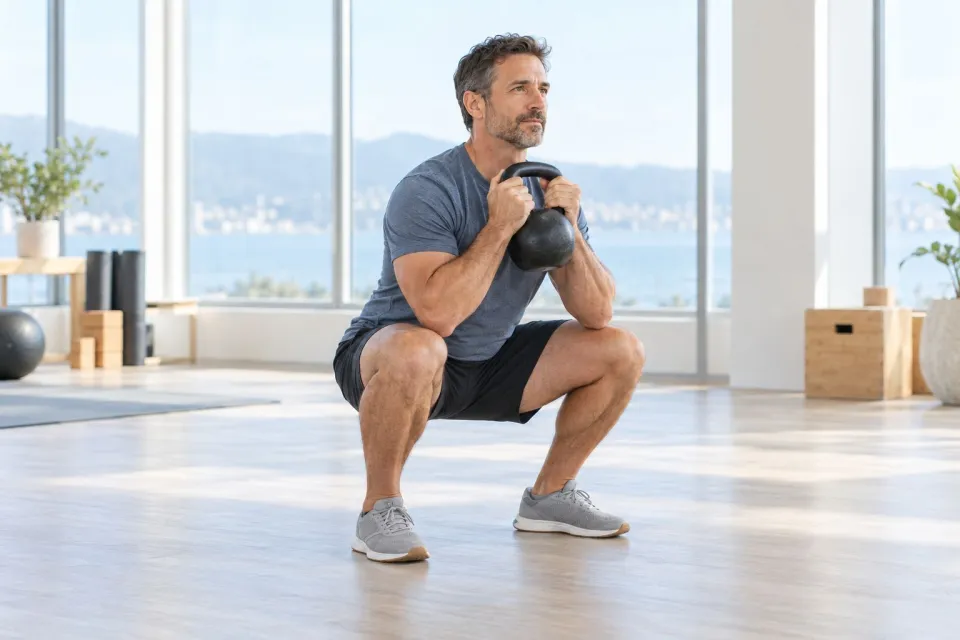
That is why, in our sessions, we train movements and not just muscle groups: pushing, pulling, squatting, lifting, carrying, rotating. These are things you do many times a day without noticing.
Strength is more than weight.
The building blocks of the programme
A fitness programme cannot be reduced to a single quality. It is made up of several components whose weight changes with your goal:
How much room each component takes up depends on your goal. The programme of someone who runs does not look the same as that of someone who works at a desk.
Strength
Resistance work done with body weight, free weights and different pieces of equipment.
Endurance
Sections that work the heart and circulatory system and raise the pace gradually.
Mobility
Work that supports the joints’ range of motion and the fluency of movement.
Balance and coordination
The body working together through single-leg, single-arm and multi-directional movements.
Core
Trunk stability, the base every movement rests on.
Recovery
Rest, stretching and load management; the unseen but indispensable part of the programme.
Basic movements and their everyday equivalents
What we mean by “Training here. Performance everywhere.” is that the movements trained in the gym relate directly to situations you come across during the day:
We make room for each of these patterns in our programmes. Which equipment and which load you work with changes with your level; the logic, however, is the same: moving the body as a whole, not piece by piece.
- Squatting: Getting up from a chair, bending down to pick something up, getting down to your child’s height.
- Lifting: Lifting a box, a large water bottle or a suitcase off the floor properly.
- Pushing: Opening a heavy door, pushing a car or a shopping trolley, pushing yourself up off the floor.
- Pulling: Pulling a door towards you, placing a suitcase on a rack, bringing something down from above.
- Carrying: Walking with shopping bags, carrying your child in your arms.
- Rotating and balance: Reaching into the back of the car, keeping your balance on a slippery surface, putting on a shoe while standing on one foot.
Who is it suitable for?
Fitness training is not only for people who are “athletes”. If any of the following applies to you, our programmes may be of interest:
We offer training options suited to different levels, from beginners to experienced participants. What matters is not where you start from, but that you start from the point that suits you.
- You want to feel stronger and more energetic during the day.
- You have been to a gym before but could not keep going because you did not know what to do.
- You want to support another activity, such as walking, running or tennis, with strength work.
- You are returning to exercise after a long break and do not know where to start.
- You want to work towards a specific goal in a planned way.
How is the programme built?
We do not apply a ready-made template to everyone. The process begins with getting to know you and moves forward on the basis of observation:
We have set out the principles behind this structure in detail on the Our Approach page.
Initial assessment
We learn about your training history, your goals and the points that need attention.
Starting plan
We set the movements, loads and weekly routine that suit your level. In the first weeks, the priority is learning the movements correctly.
Gradual progression
As your body adapts, the difficulty is increased step by step. We do not rush; we choose what is sustainable.
Tracking and updating
We follow your progress and rearrange the programme whenever it is needed.
What is a training session like?
Although the content changes with the goal, a session usually has three parts. In the warm-up, the body is prepared for that day’s work; the joints are mobilised and the heart rate is raised slowly. In the main part, strength, endurance or a combination of the two is trained; your trainer watches your technique and adjusts the load and pace to you. In the close, the pace is brought down and the body is left to recover.
Our aim is for you to leave a session feeling well worked, not worn out. Today’s training should be tomorrow’s energy, not the next day’s fatigue.
Tracking: making progress visible
One of the important parts of ATC’s core approach is a training experience that can be tracked. With our technology infrastructure and trainer assessments, we aim to make your process as measurable as possible.
We use technology not to turn you into numbers but to know you better. Data does not make decisions on its own; the person who interprets it and reflects it in the programme is your trainer. Nor is progress measured only by the weight you lift: being able to do a movement more comfortably, recovering more quickly or feeling less tired at the end of the day are also signs of improvement.
One-to-one and group options
Depending on the discipline, there are options to work one-to-one or in a group. In one-to-one work, the programme and pace are set entirely around you. In group work, the energy of training together comes into play; the trainer offers the movements with options suited to different levels.
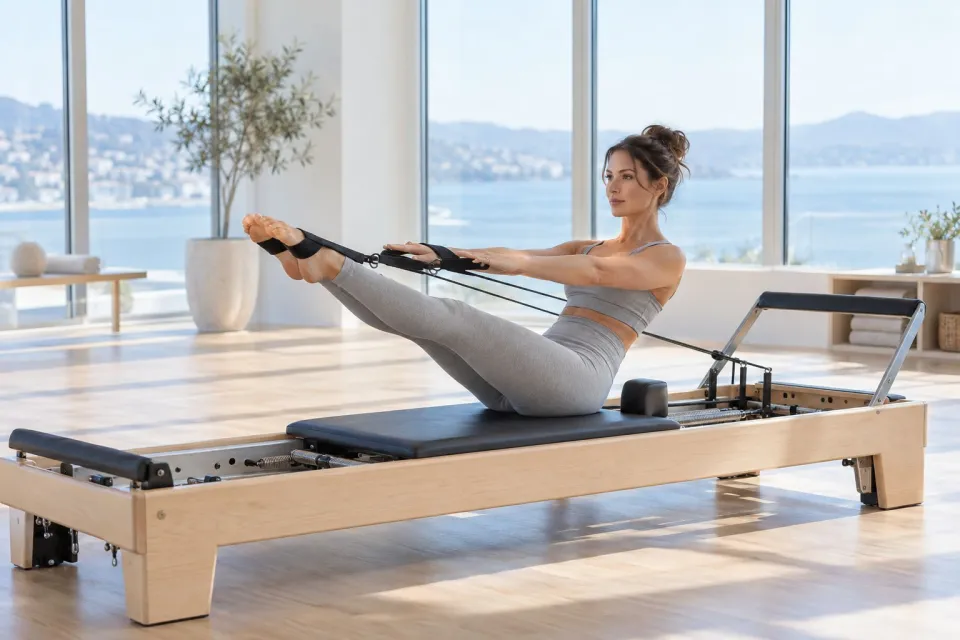
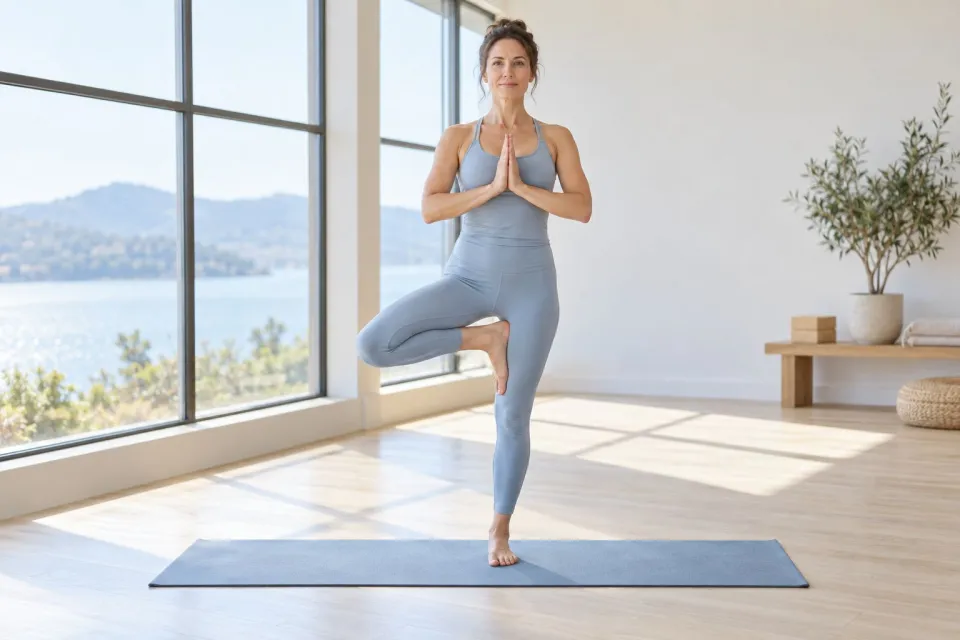
You can choose the model that suits you based on your goals and preferences. It is also possible to continue your fitness work alongside Pilates or yoga; you can find more information about these combinations on the Disciplines page.
Common misconceptions about fitness
“If I train with weights, I’ll build more muscle than I want.”
A marked increase in muscle mass requires long-term training and nutrition planned specifically for that purpose. The place and intensity of strength work in the programme are determined by your goal.
“Strength training is for young people.”
Strength is a quality whose importance grows with age, not one that fades. Being able to keep your freedom of movement as the years pass is part of what we call performance for life. The programme is planned around your current condition, not your age; if you have a health problem, we recommend consulting your doctor first.
“If I leave without sweating and being worn out, the session hasn’t worked.”
The value of a session is not measured by how much it tires you. Days when the focus is on technique and the load is deliberately kept low are part of the programme too. What matters is not the intensity of a single day but the sum of the weeks.
“I gave up once; I’ll give up again.”
Having taken a break from exercise is not a failure; it is a common situation. Most of the time the problem is not willpower but a programme that does not fit into life. That is why we build the weekly routine around your daily pace as well as your goal.
The hours outside training
A few hours of training a week are not independent of the rest of your time. Your sleep pattern, how much you move during the day and your nutrition affect both how you feel in training and how your body recovers.
Your trainer takes these conditions into account when building the programme: the load can be lightened in a busy working week and increased in periods when you are rested. If a personalised nutrition plan or a health-related assessment is needed, it is best to consult the relevant specialist for that.
Preparing for your first session
- Choose sports clothes you can move in comfortably and trainers with a flat, non-slip sole.
- Having eaten something light an hour or two before training helps; try not to arrive hungry or very full.
- Bring water and a small towel with you.
- If you feel tired or unwell that day, tell your trainer; the programme can be lightened accordingly.
Frequently asked questions about Fitness
I have never trained with weights before. Can I start?
Of course. In the first weeks the priority is learning the movements correctly; loads are chosen according to your level and increased gradually.
How many days a week should I train?
That depends on your goal, your current fitness and your daily life. Our trainers help you set up a routine that is sustainable for you.
How long will it take to see results?
This varies from person to person, and it would not be right to give a definite timescale. Factors such as regular attendance, sleep and nutrition are decisive. We aim to make your progress visible step by step by tracking it.
Can I take a trial class?
You can find out about our current trial class and introductory meeting options through our contact form or on WhatsApp.